
Chemical Dosing
Precise Chemical Delivery Starts With Control.
A correctly chosen chemical dosed incorrectly is a correctly chosen chemical that does not work. Dosing is where treatment design either survives contact with the plant or does not.
01What It Solves
The Problem It Addresses.
Manual and timer-based dosing assumes the system is always in the same condition. It is not. Load changes, make-up water changes, seasons change. Dosing tied to a measured parameter follows the system instead of guessing at it.
02How It Works
How It Actually Works.
- 01
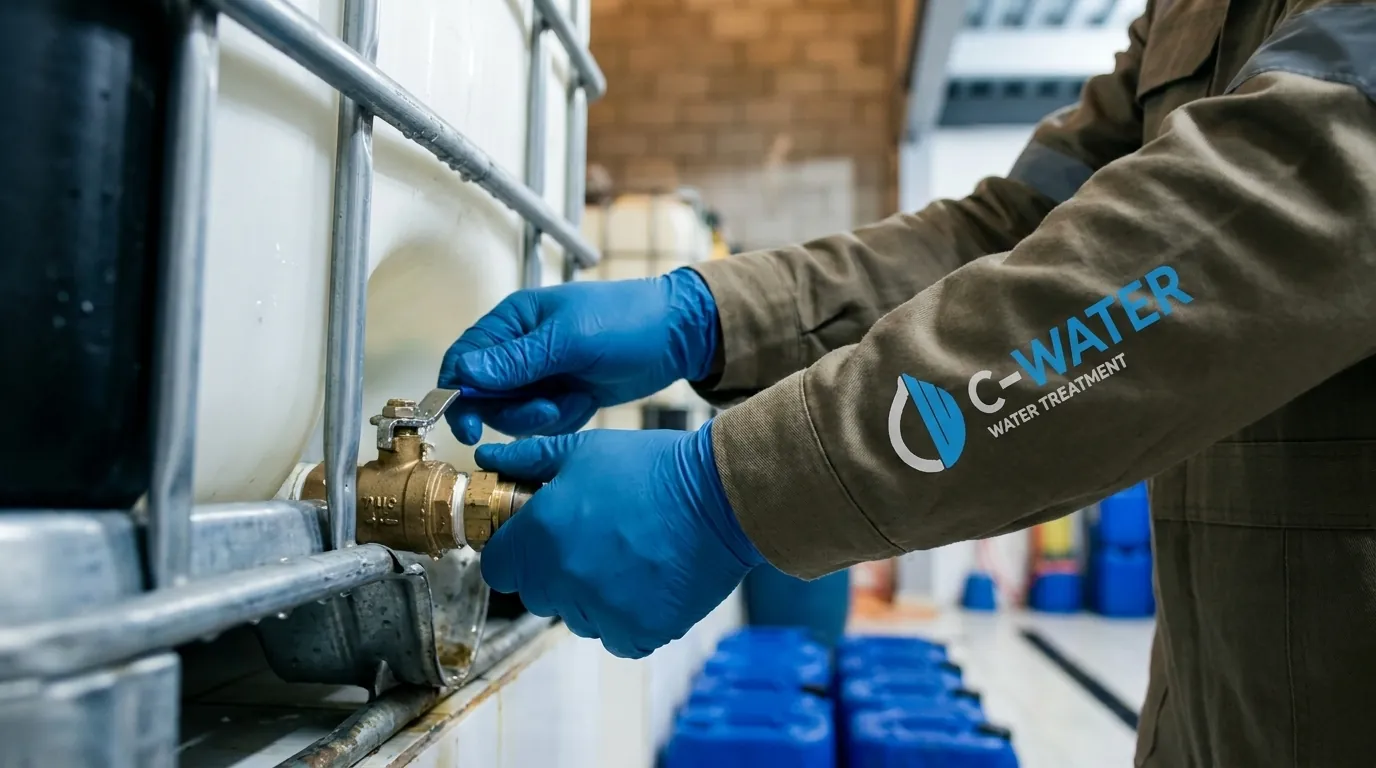
Storage and containment
Chemical compatibility, bunding, level indication and safe access. Low-level detection prevents the most common silent failure: a pump that has been running dry for a week.
- 02
Metering pump selection
Sized to the turndown the programme needs, not just to peak dose. Viscosity, back pressure, degassing behaviour and duty cycle all narrow the choice before capacity does.
- 03
Injection point design
The chemical has to reach a turbulent, well-mixed part of the system, away from surfaces it could attack in concentrated form, and far enough upstream of the measurement point to represent a real reading.
- 04
Feedback and verification
Dosing driven by conductivity, ORP, pH, flow or make-up volume closes the loop. A separate check — residual test, inhibitor level, corrosion coupon — confirms the loop is telling the truth.
03Applications
Where It Is Used.
- Cooling tower inhibitor and biocide feed
- Boiler feedwater and condensate treatment
- RO antiscalant injection
- pH correction and neutralisation
- Coagulant and polymer dosing
04Technology Partner
Walchem
C-Water specifies the measurement points, sets the control strategy against the actual treatment programme, commissions the loop and supports it in service. The instrument is the tool; the control philosophy is the engineering.
Explore the partnershipRelated Solutions
Related Products
Related Services
Related Knowledge
Is this the right technology for your system?
That question is answered by the water analysis and the operating conditions, not by a catalogue. Start there.