
Power & Utilities
Protect the Water Systems Behind Reliable Generation.
In generation, water chemistry sits directly on the efficiency and availability of the plant. Small, sustained deviations cost more over a year than most single failures.
01Typical Water Systems
What Is Usually on Site.
Boiler and steam cycle
High-purity water chemistry with tight control limits and continuous verification.
Condensate and feedwater
Return quality, iron and copper transport, and oxygen control across the cycle.
Circulating cooling water
Large-volume systems where a small efficiency change has a large absolute value.
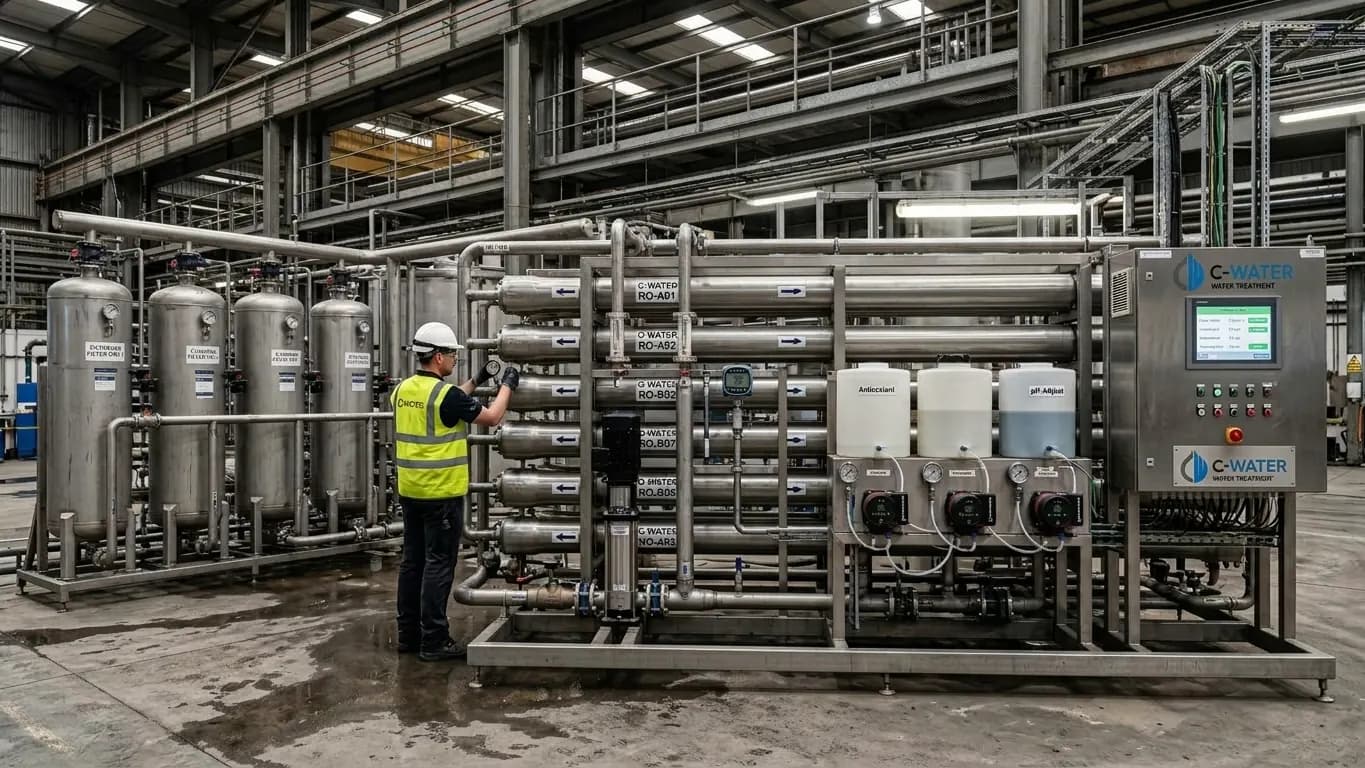
Pretreatment and demineralisation
Producing make-up to the purity the cycle requires, reliably and at volume.
02Industry Water Challenges
What Makes It Difficult.
Tight chemistry limits
High-pressure cycles allow very little dissolved solids, which places the burden on make-up treatment.
Corrosion product transport
Iron and copper moving through the cycle deposit where heat flux is highest.
Cooling water volume
Large circulating systems make both treatment cost and water consumption significant absolute numbers.
Availability requirements
Outages are planned far ahead; unplanned chemistry-driven outages are expensive in every direction.
03Operational Risks
What Is at Stake.
Heat rate degradation
Fouled condensers and scaled tubes both show up as fuel.
Tube damage
Chemistry excursions in high-pressure plant have consequences measured in weeks of outage.
Water availability
Where supply is constrained, cooling water consumption becomes a generation constraint.
Related Solutions
Technology Stack
Related Products
Related Knowledge
Discuss Your Facility.
Every site is different, even within a sector. Tell us what you operate and what it is doing.